Winter in Hagerstown brings more than just cold mornings and occasional snowfalls; it also brings unique challenges for your roof. As temperatures rise and fall throughout the season, many homeowners begin to notice leaks, stains, or damage that wasn’t there before. Two of the most frequently seen culprits behind winter roof damage are ice dams and freeze damage. While they’re often confused, they’re caused by different processes and require different solutions.
At Home Source Roofing, we believe homeowners deserve clear explanations, not confusion or pressure. Understanding how ice dams and freeze damage work can help you protect your roof, your home, and your peace of mind during the winter months.
What Are Ice Dams?
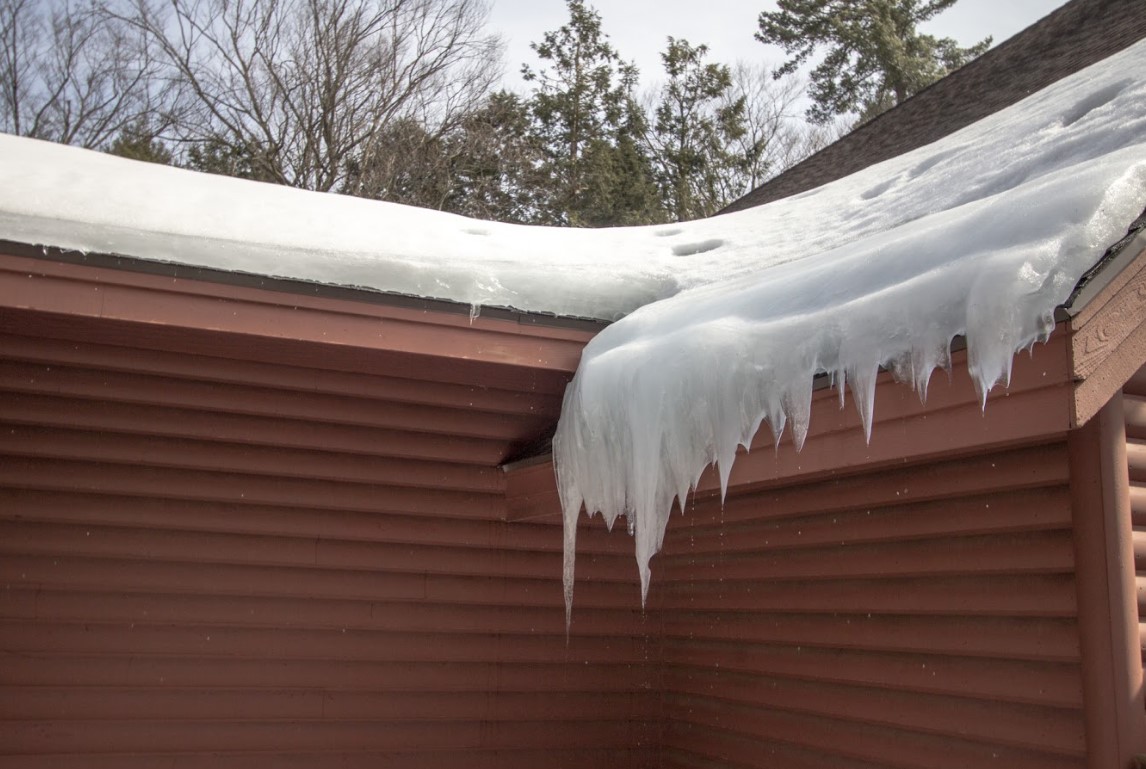
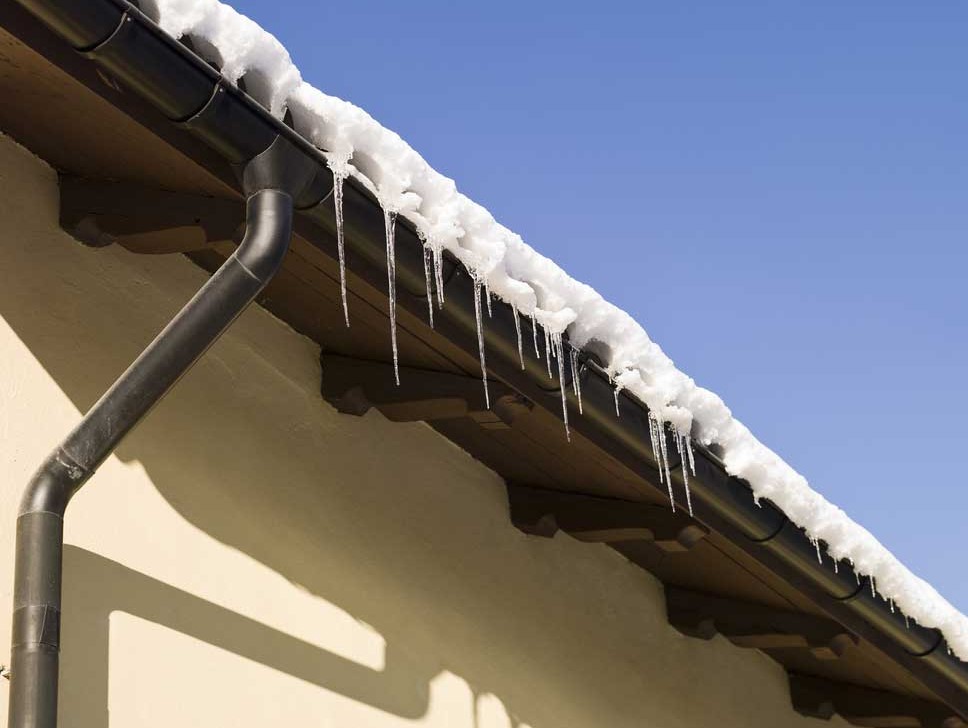
So, what really are ice dams? Ice dams start to form when snow on your roof melts and refreezes along the colder edges, usually near gutters or eaves. This happens when warm air escapes into the attic, heating the roof surface unevenly. Melted snow runs down toward the roof edge, where colder temperatures cause it to freeze again, creating a ridge of ice.
As the ice dam grows, it prevents additional melting snow from draining properly. Water backs up behind the ice and can seep beneath shingles, leading to leaks, insulation damage, and interior water stains. This is why ice dam prevention is such an important part of winter roof care in Hagerstown.
Ice dams are most common during winters with frequent snow and fluctuating temperatures, conditions that are typical in western Maryland.
What Is Freeze Damage?
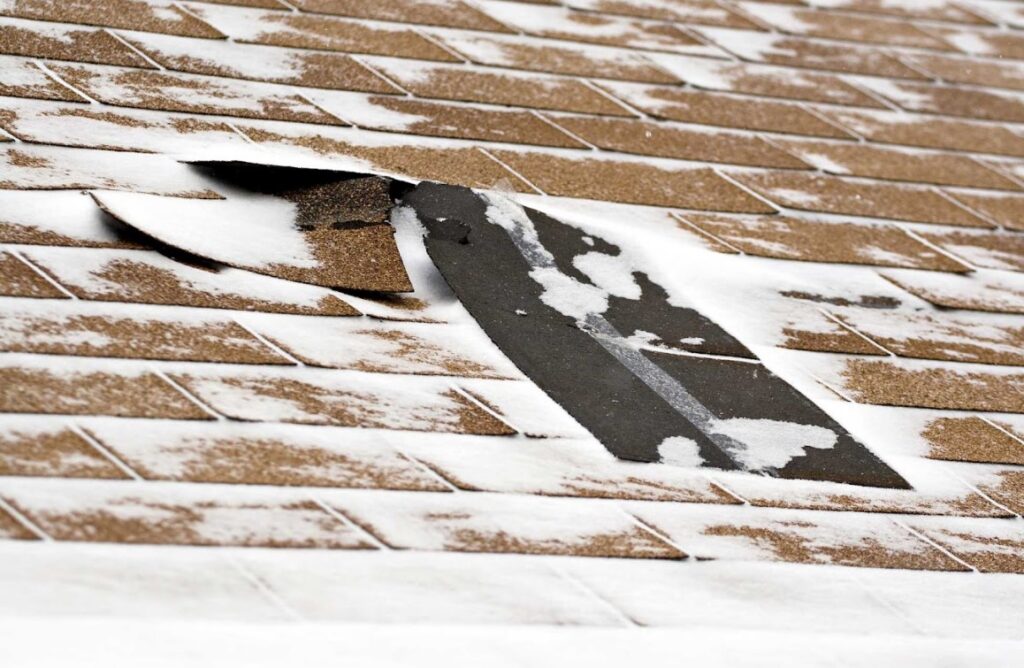
Freeze damage, often referred to as freeze–thaw roofing damage, occurs when moisture penetrates roofing materials and then repeatedly freezes and expands as temperatures drop. When water freezes, it expands, widening small cracks or gaps. When it thaws, water moves deeper into the material, only to freeze again later.
Over time, this cycle weakens shingles, flashing, sealants, and roofing membranes. Freeze damage doesn’t always cause immediate leaks, but it slowly degrades roofing materials and increases the risk of failure as winter progresses.
Ice Dams vs. Freeze Damage: Key Differences
While both problems stem from winter conditions, they affect roofs differently:
- Ice dams are caused by heat loss and poor attic ventilation, leading to water backup at the roof edges.
- Freeze damage results from moisture intrusion combined with repeated temperature changes.
In Hagerstown, where winter temperatures often hover around freezing, both issues can occur simultaneously, making professional evaluation especially important.
How Different Roofing Systems Are Affected
Home Source Roofing works with a variety of residential and commercial roofing systems, each of which responds differently to winter stress.
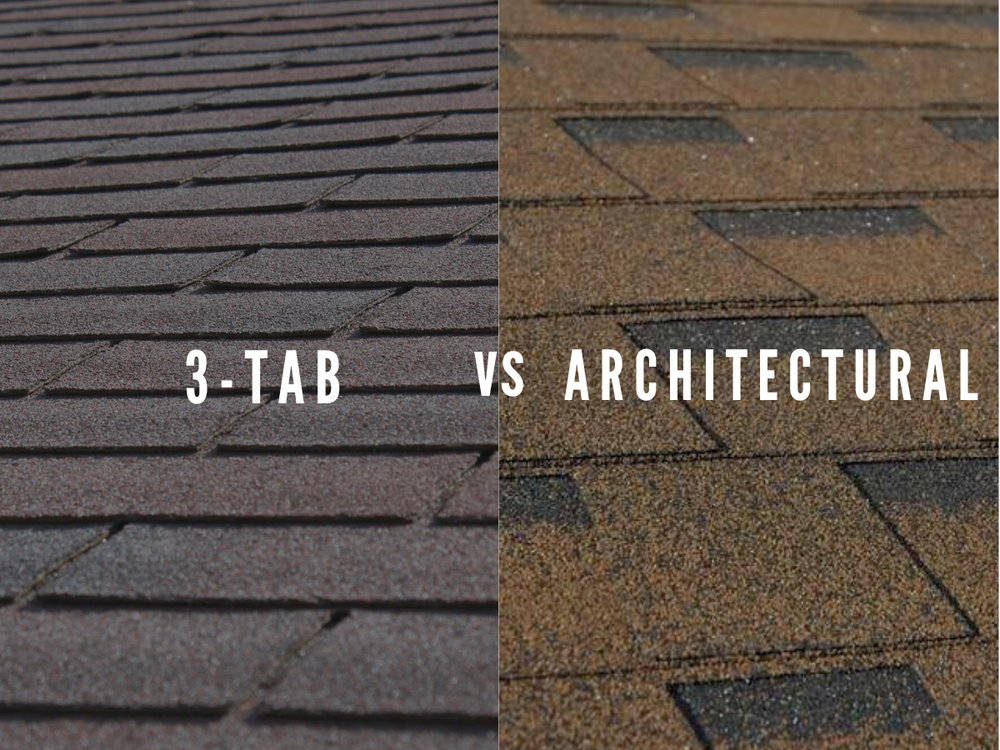
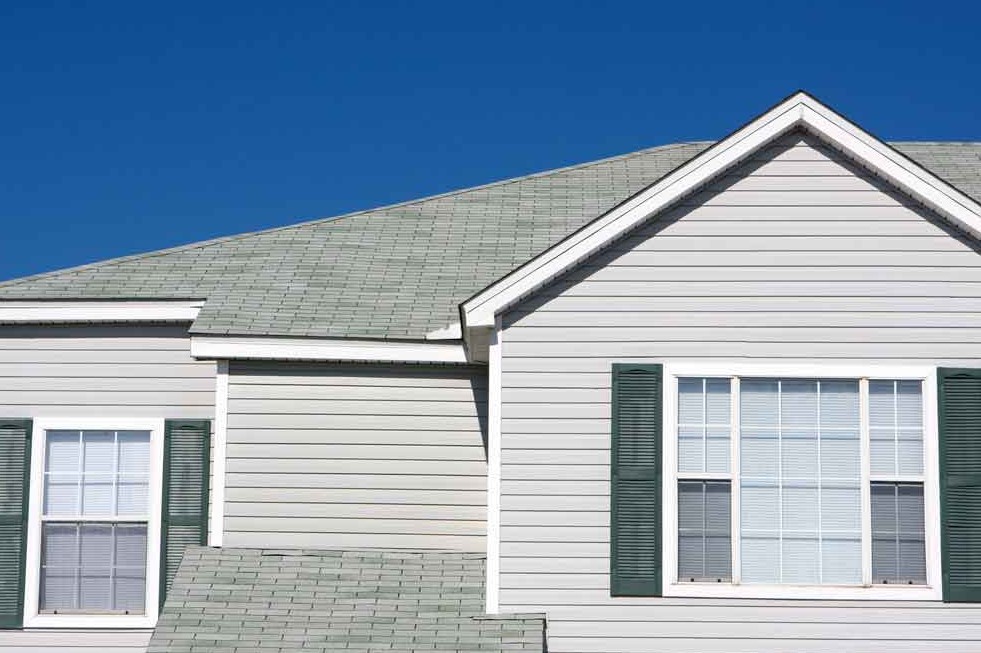
Asphalt Shingle Roofing
Ice dams can lift shingles and allow water to accumulate beneath them, while freeze–thaw cycles can cause cracking and granule loss as shingles age.
Metal Roofing
Metal sheds snow effectively, reducing ice dam risk, but freeze–thaw cycles can still stress seams, fasteners, and flashing over time.
Cedar Roofing
Cedar is particularly sensitive to moisture. Ice dam backups and freeze damage can accelerate splitting, warping, and decay if moisture isn’t allowed to escape.
Slate Roofing
Slate tiles are durable, but freeze–thaw cycles can affect underlayment, flashing, and fasteners long before the slate itself shows visible damage.
Commercial Roofing Systems (TPO, EPDM, Modified Bitumen, BUR)
Flat and low-slope roofs are vulnerable to ponding water from melting snow. When that water refreezes, it can stress membranes, seams, and insulation, especially during extended cold spells.
Why Ice Dam Prevention Matters in Hagerstown
Ice dams aren’t just an inconvenience; they’re a sign of underlying issues like poor ventilation, insulation gaps, or drainage problems. Preventing ice dams helps reduce the risk of interior water damage, mold growth, and costly repairs.
Because Hagerstown experiences frequent freeze–thaw cycles, even minor ice dam formation can lead to repeated water intrusion throughout winter. Dealing with these issues early can make a significant difference in roof performance and longevity.
How Home Source Roofing Helps
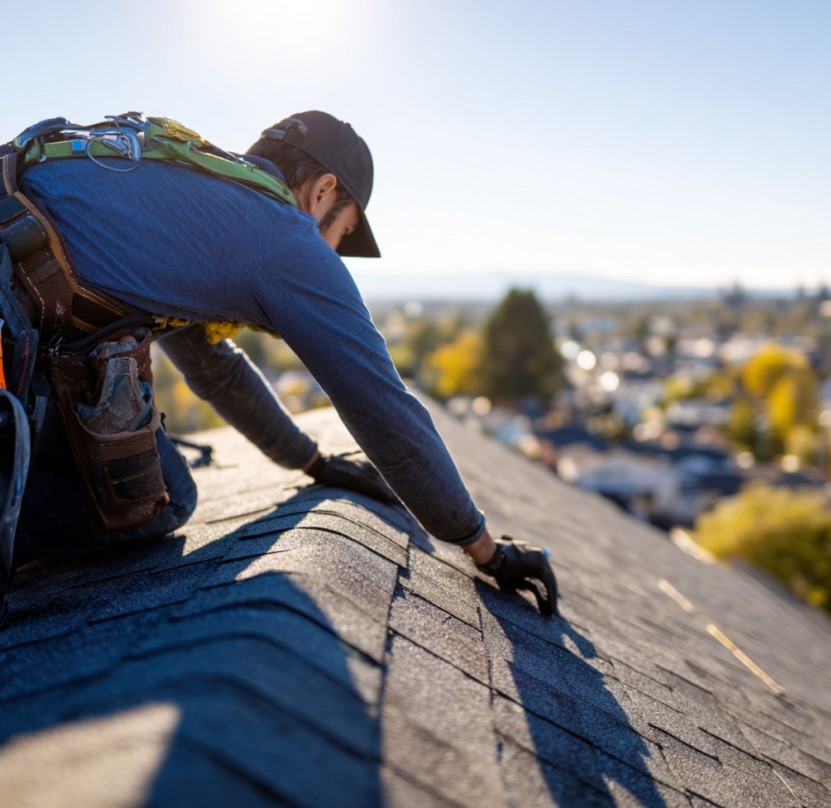
At Home Source Roofing, we approach winter roof issues like a diagnosis, not a sales pitch. Our team evaluates your roof, ventilation, and drainage systems to determine whether ice dams, freeze damage, or both are contributing to the problem.
If repairs are needed, we explain why, document what we find, and recommend solutions based on evidence. For storm-related or winter damage, our experience with insurance claims assistance allows us to help homeowners navigate the process with confidence and clarity.
We provide residential and commercial roofing repairs, maintenance, and replacements, as well as related exterior services such as gutters and siding that play a critical role in winter roof performance.
Protect Your Roof Before Winter Damage Spreads
Winter roof problems rarely improve on their own. Ice dams and freeze damage tend to worsen with each temperature swing, increasing the risk of leaks and long-term deterioration.
If you’re seeing signs of winter roof damage or want to prevent issues before they start, Home Source Roofing is here to help. Our team is committed to protecting your home with honest assessments, expert guidance, and solutions designed for Hagerstown’s winter conditions. Get in touch with us today to book an inspection and get expert support you can trust.